


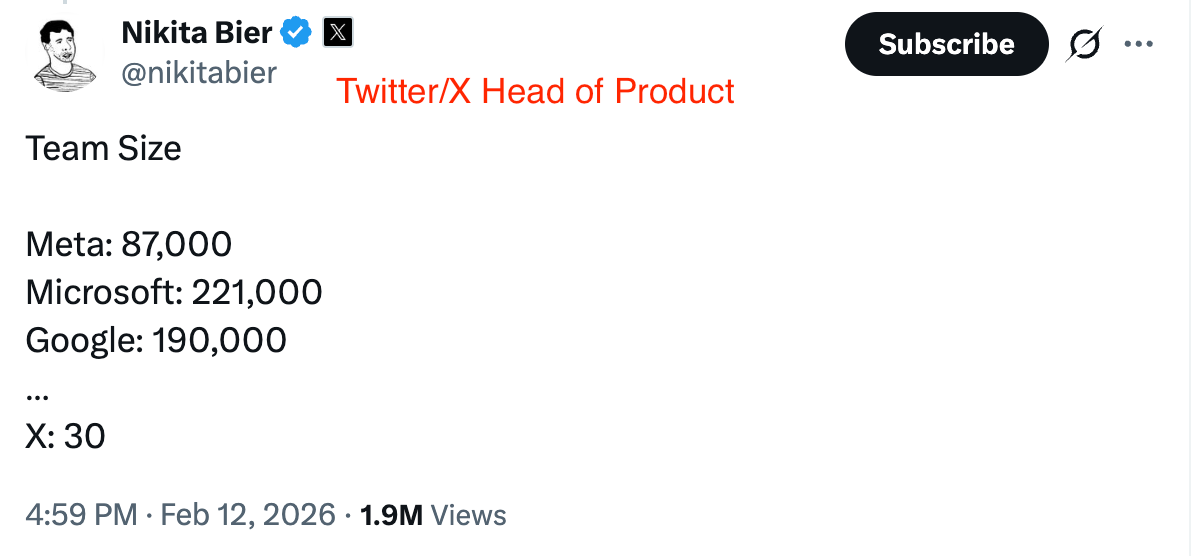
Twitter/X has ONLY 30 people in product/engineering supporting an app with >$1B ARR and >500M active users. Google has 190k. At TryHackMe, PMs submit code and we do 10x more with 10x less - but building a great product is still hard. Here are my thoughts on the future and what we're doing.
TryHackMe (THM) is at a stage where the bottleneck is product & design - what used to take a team of 10 engineers can be done by 1. Product taste has always been important, but I struggle to see how it gets accelerated at the same rate as engineering when creativity is critical and taste is built over years.
I think building a truly great product is really difficult, but I think it’ll be down to: brand, product taste, and user distribution. All comes from a small talent dense team. I could write an entire article on this, but for another day.
Some of our PMs submit code now - using Cursor to fix small changes in the product (reviewed by an engineer), but also to streamline creating Jira tickets with less communication overhead, making it clearer for engineers to pick up and build.
I hate the word “vibe coding” as it implies AI slop (or a not-finished or early product), yet models are becoming so good soon I can see a world where we don’t code anymore. I prefer “AI crafted”.
The way we do development product is changing - refinement is pointless in many cases - why spend so much time planning, when you can come to the call with the prototype developed. Should product refinement now be only for engineers, where they review together and test, vs plan?
I think in the future product managers will be more “full stack” - doing user research, analysis, design, and development. Here are some examples from our team that support this theory (none of them wrote 1 line of code):
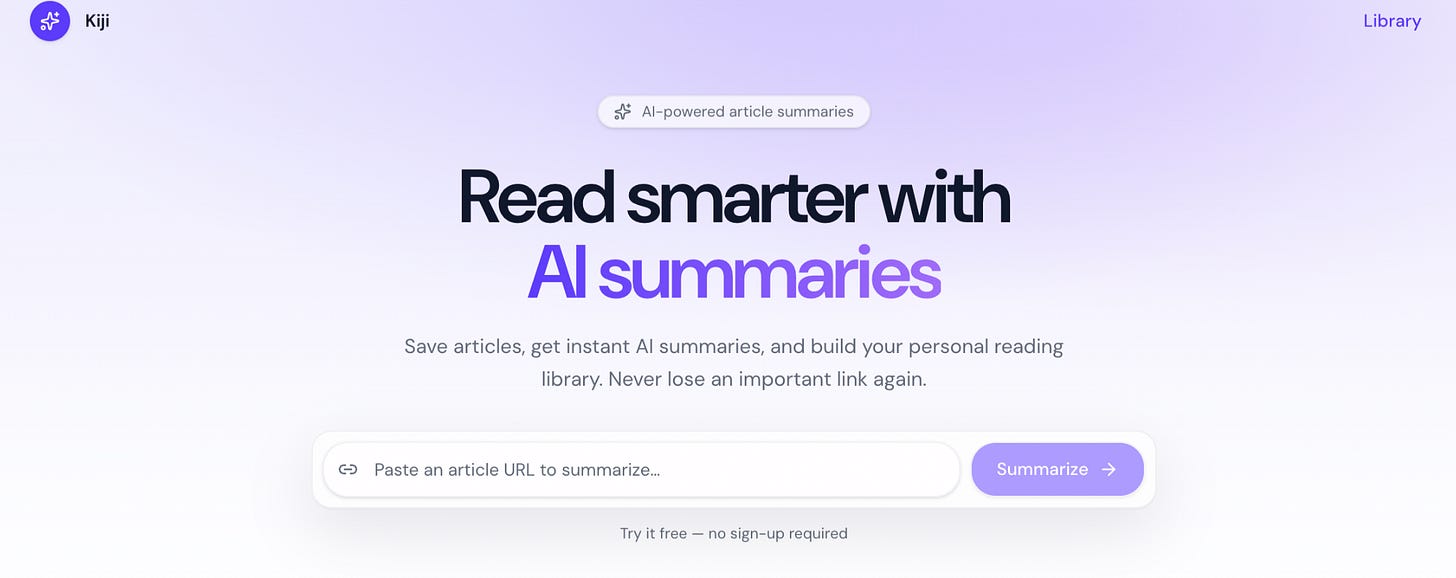
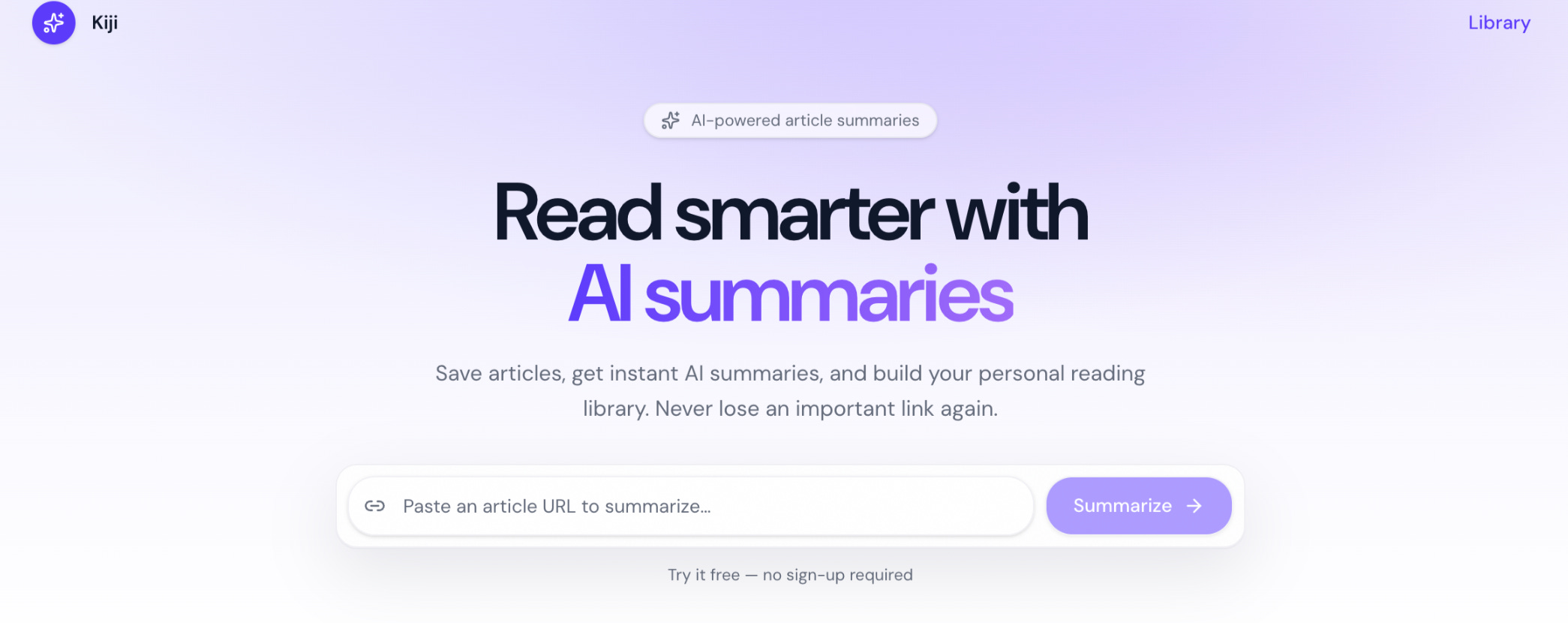
Our Head of Product built a Chrome extension - replacing an app he loved that shut down - with a database, Google OAuth, email notifications, and AI-powered article summarisation.
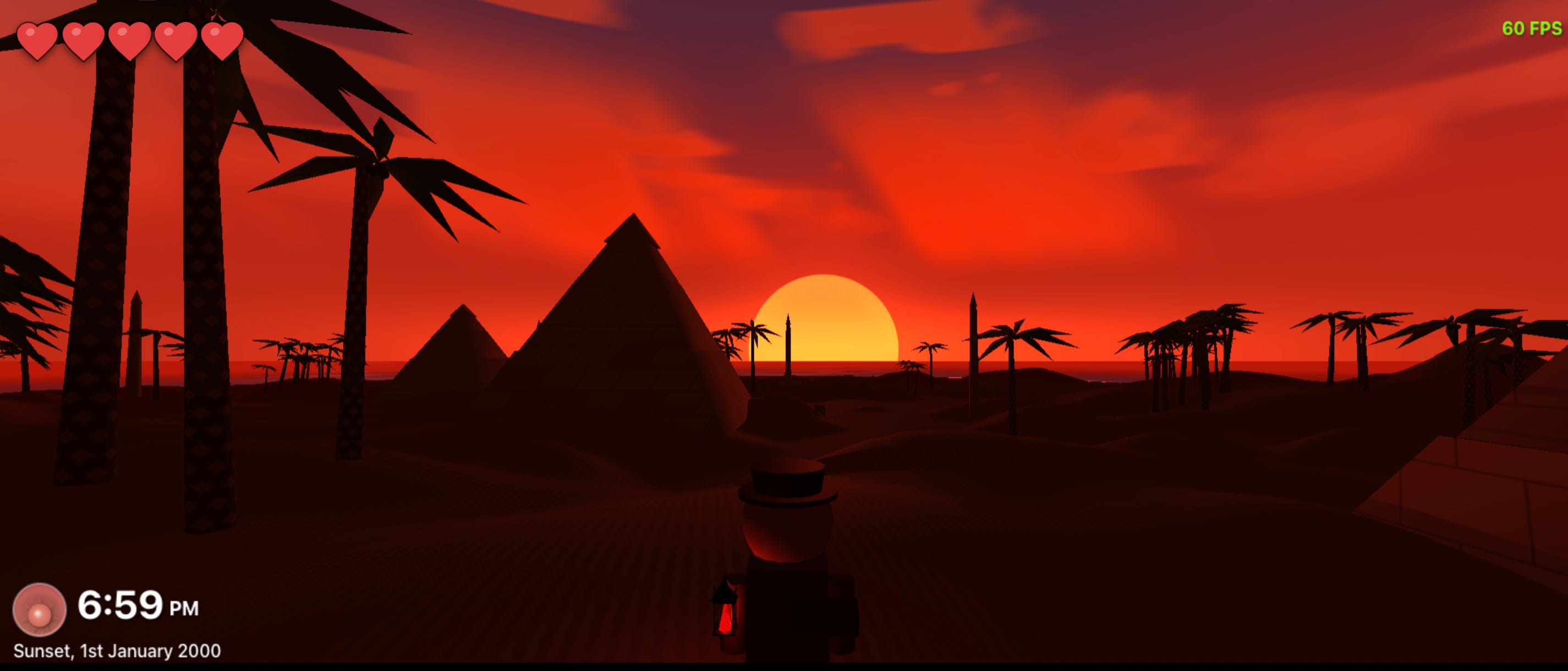
Our Head of Engineering built a fully working web game in 10 hours (no Unity)

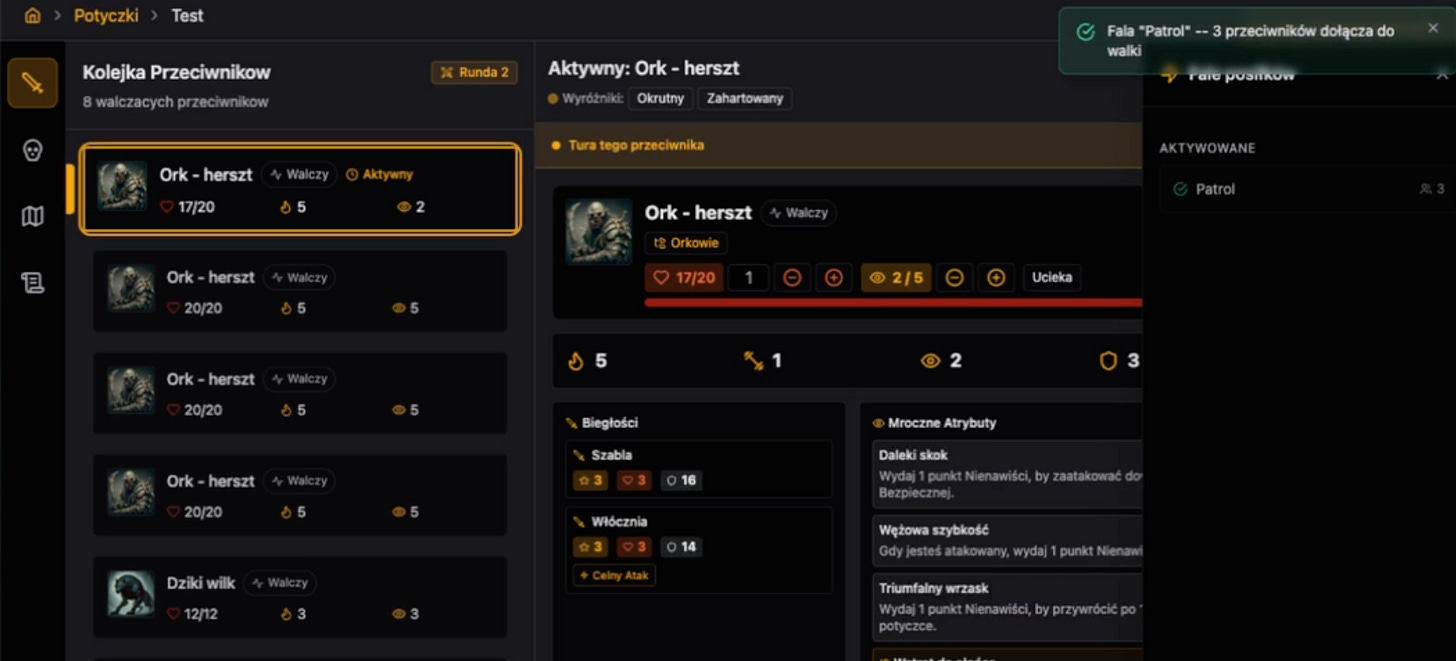
Our Head of Content built a multiplayer role-based game simulator.
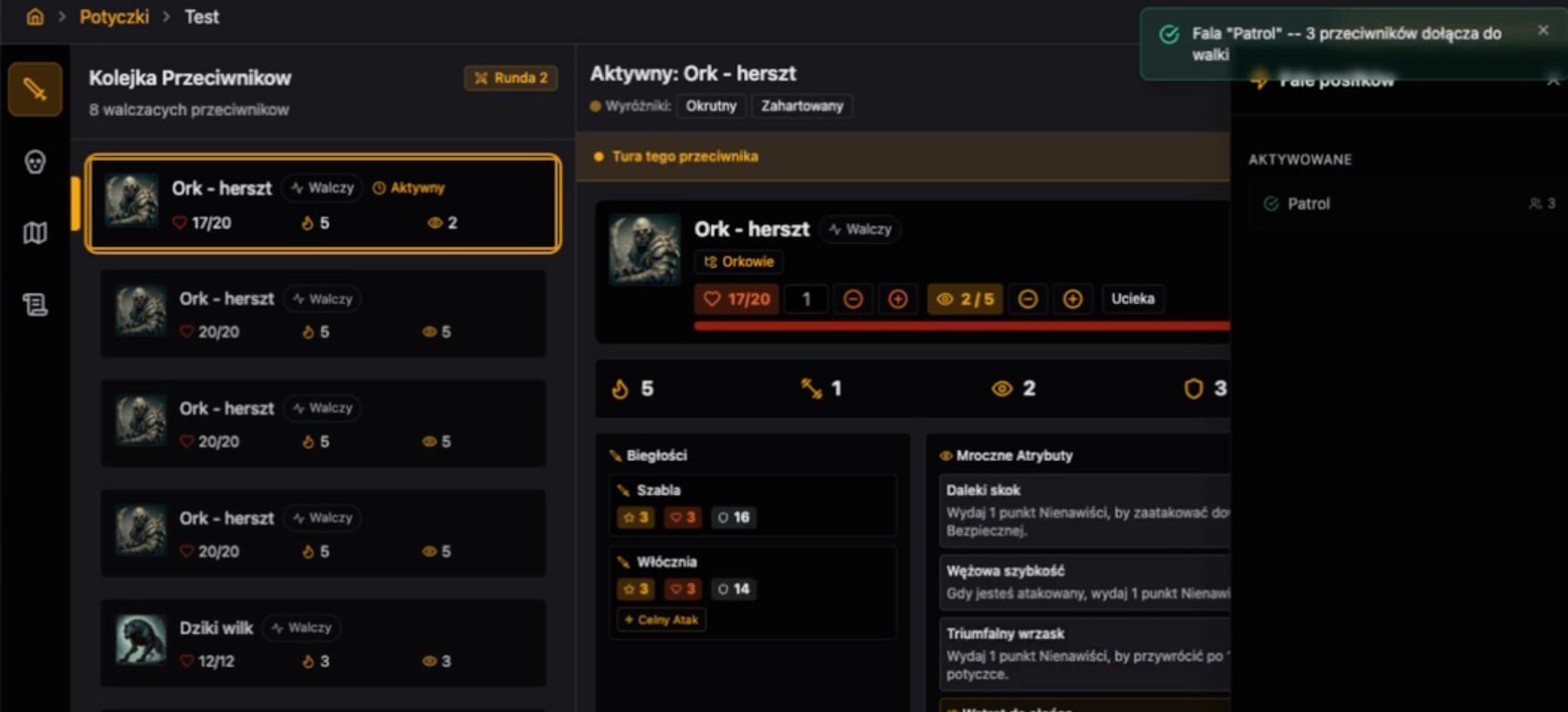
We even use a data tool now where we its: “prompt to analysis”. Our many terrabytes of user analytics can be queried, so everyone can do light analysis.
To engineers - I don’t think you’ll be replaced, but as I wrote before: “AI won’t replace you, but someone using it will”. Complex apps still require technical oversight. I also think we’ll see a rise of product engineers, which is why I love engineers with founder backgrounds or experience at true PLG companies.
To be clear for those at THM reading this - we won’t be downsizing. Team size stays the same, but we expect higher productivity. It might also mean fewer engineers per PM (e.g. 1 PM + 3 engineers becomes 1 PM + 1 engineer) - perhaps we hire more PMs and designers. It means engineers will also see more of an impact of their work!
Proof of X 30 person team claim (from their Head of Product) here.
A great read as always! Keep up the great work :). I totally agree—what used to take 10 people now takes about 3 with AI assistance. It’s a very exciting time to be a developer; personally, I love that you I can finally build those side projects I've always dreamed about
Def agree, if anyone can build software then things like taste, brand and experience become the main differentiator.